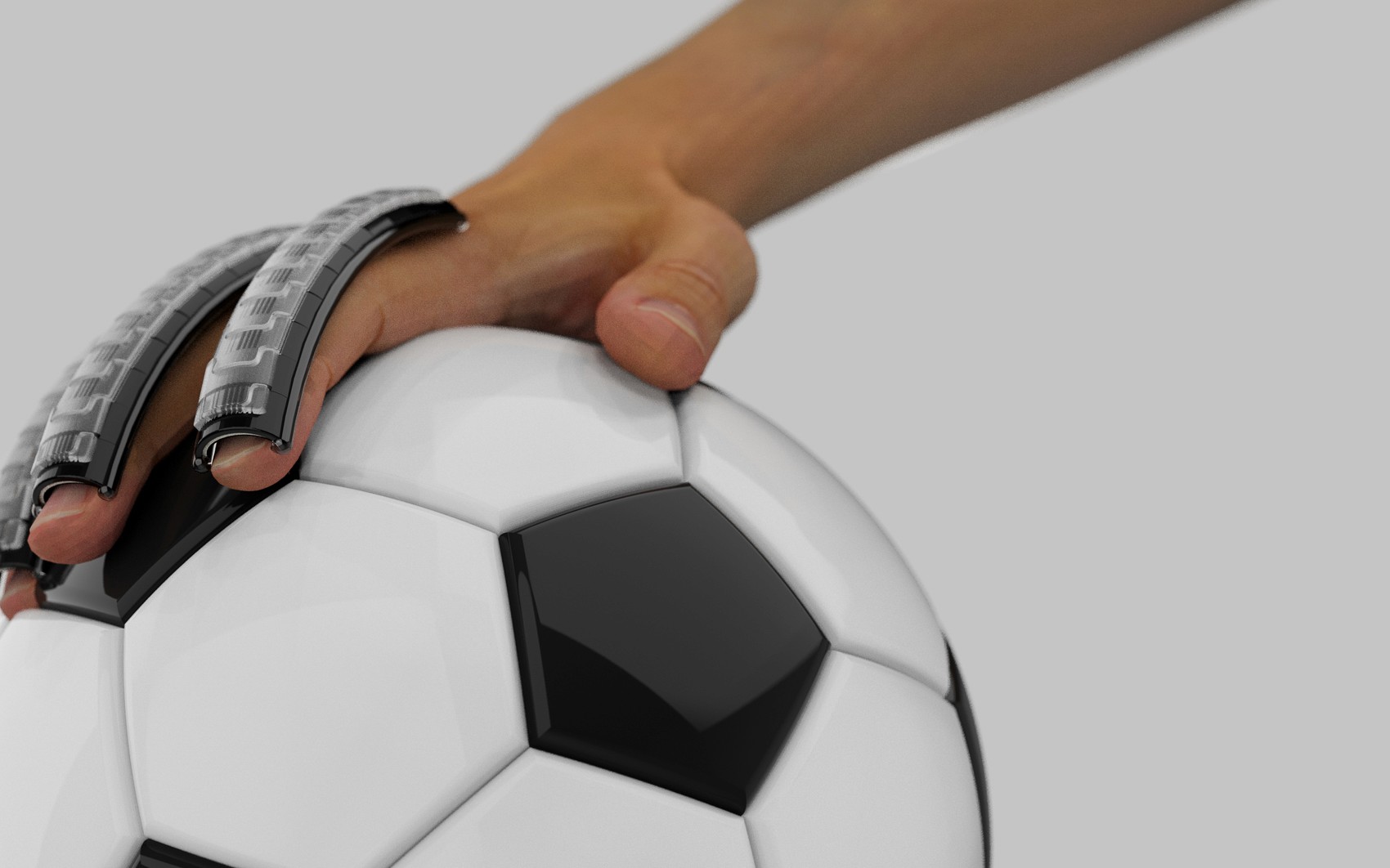

Engineered from Avient's PolyStrand, a thermoplastic composite, FlexGuards provide multi-axis finger support for goalkeepers, preventing lateral hyperextensions and fractures during high-impact saves.
Product Development Studio
Project Duration: 6 Weeks
Team Members: Kaitlyn Chuang
Georgia Institute of Technology
In Collaboration with Avient Manufacturing
Skills Used
Material Analysis
Market Research
Iterative Prototyping
User Testing
Tools used
Laser Cutter
Thermoform Press
Adobe Illustrator
KeyShot
Material ANALYSIS
What is PolyStrand?
A reinforced thermoplastic material made up of high-strength unidirectional fibers and resin.
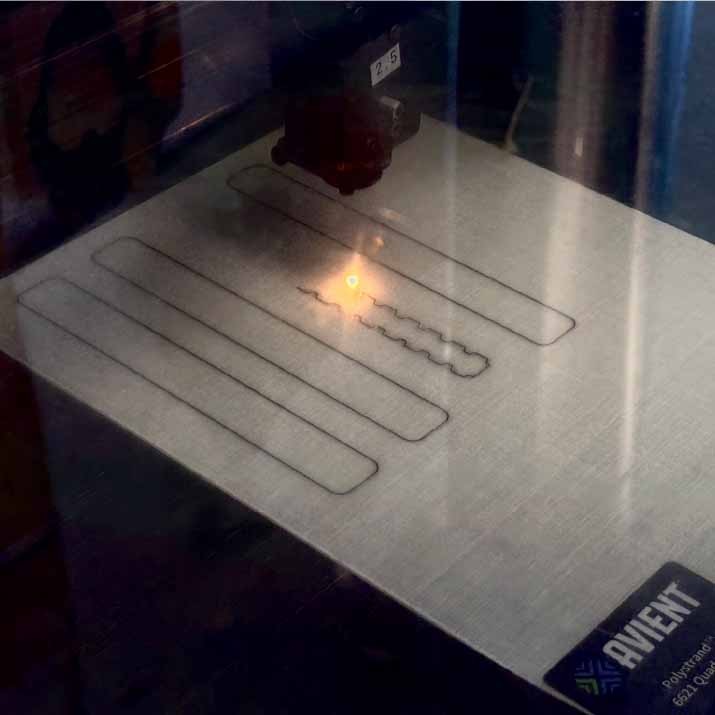
Laser-Cuttable
Gives us the ability to cut the sheets into panels with incredibly precise and complex shapes.
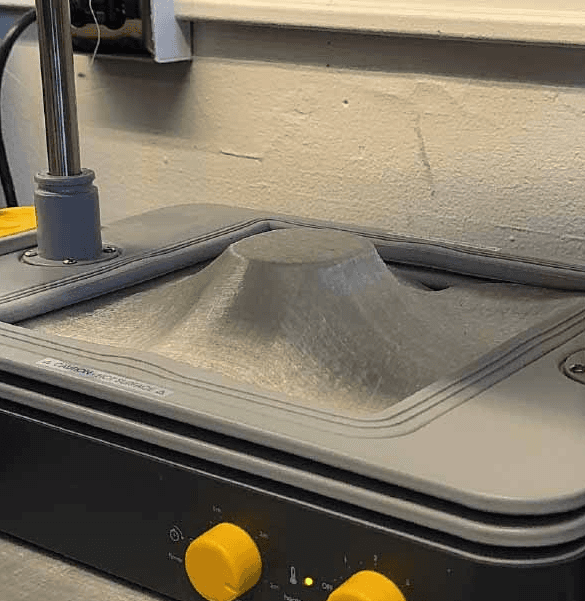
Thermoformable
When heated, the sheets become malleable, and become incredibly rigid when cooled, giving it great structural integrity.
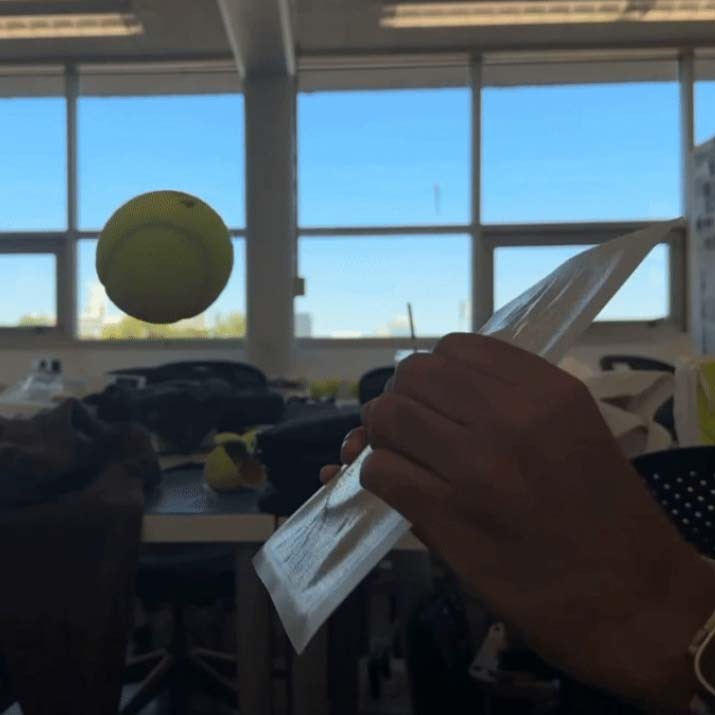
Impact Resistant
The sheets reflect significant amounts of kinetic energy, making projectiles bounce off when thrown at it.
Market Research
Flaws in current finger saves.
After analyzing the limitations of existing finger saves — the plastic spines used in goalkeeper gloves to prevent finger injuries — we found a significant opportunity to improve upon the current design in a way that would enhance goalkeeper safety and performance.
↑ Flaw Image 01
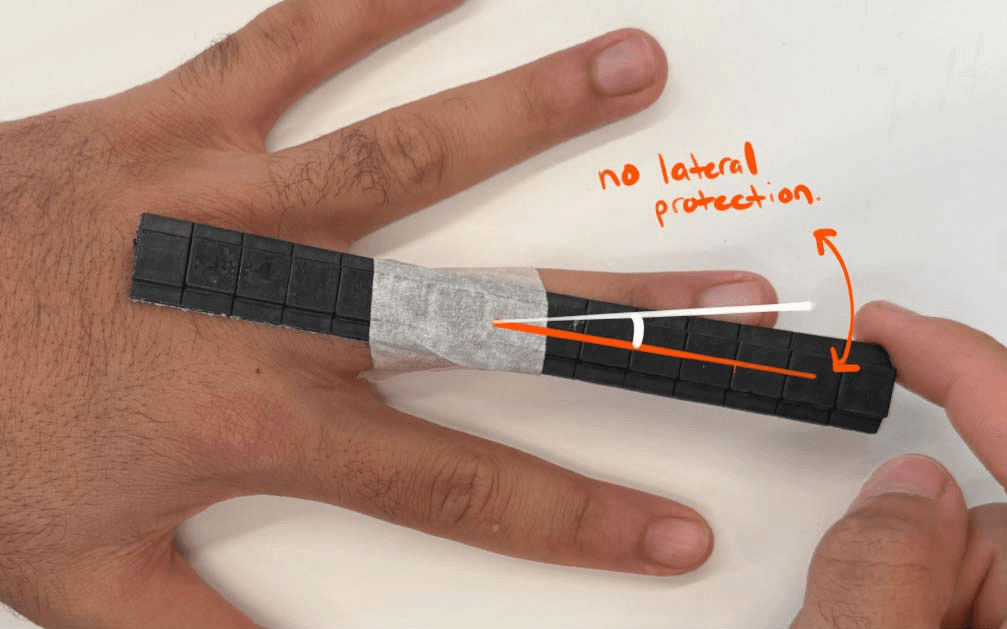
Single-Axis Protection
Standard finger saves provide no protection from lateral impact due to their flat, segmented construction.
↑ Flaw Image 02
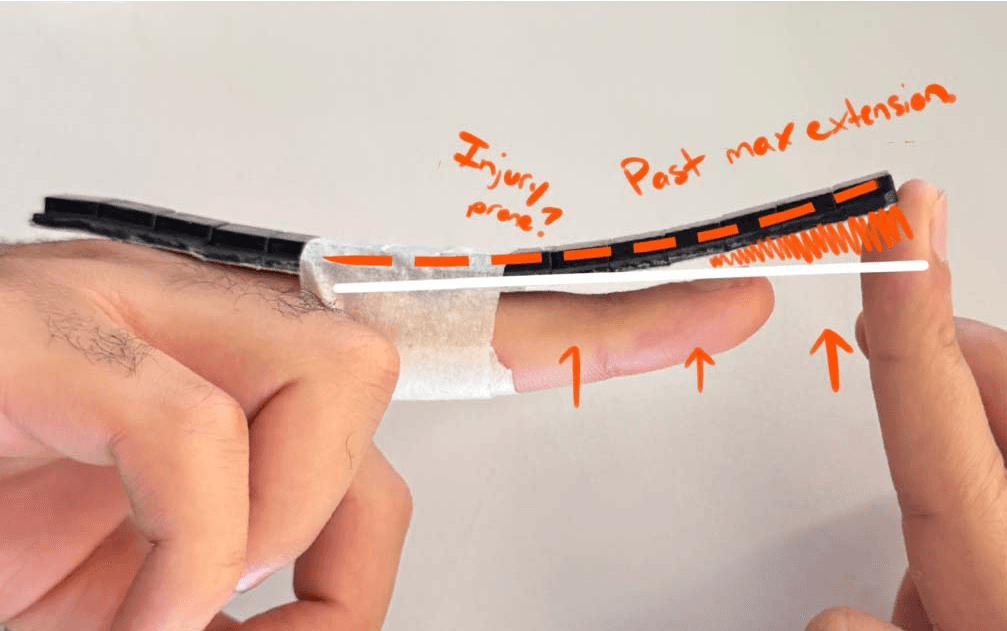
Allows for Hyperextensions
The construction and use of malleable materials in the guards allow the spines to extend backwards, making fingers prone to hyperextension, especially on powerful shots.
↑ Flaw Image 03
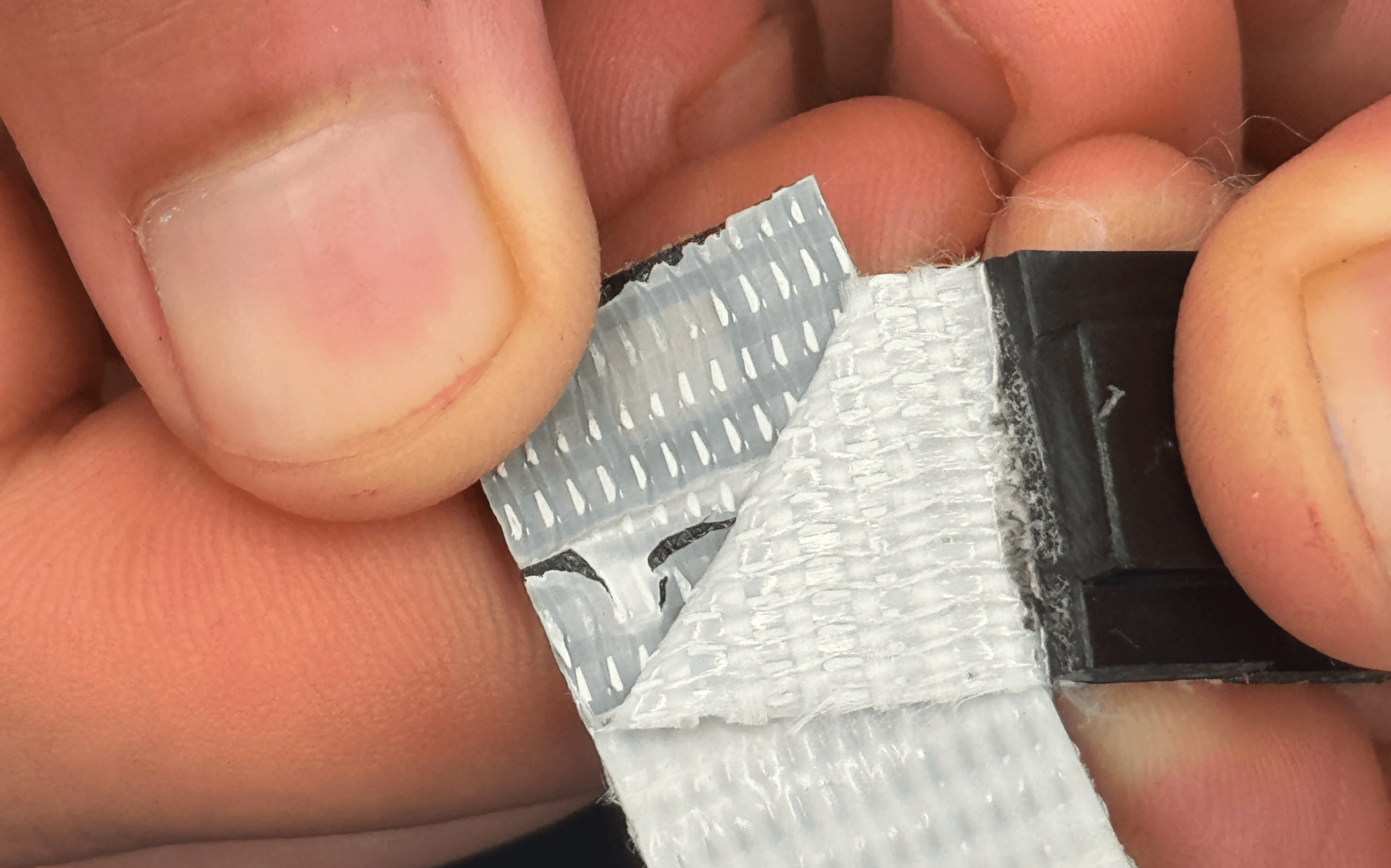
Weak Torsional Load Tolerance
The taped backing on the spines easily seperate when torsional force is applies to the spine.
The Brief
Using PolyStrand, how can we improve the design of goalkeeper fingersaves to enhance lateral hyperextension and fracture prevention?
Model Development
With an updated hinge system…
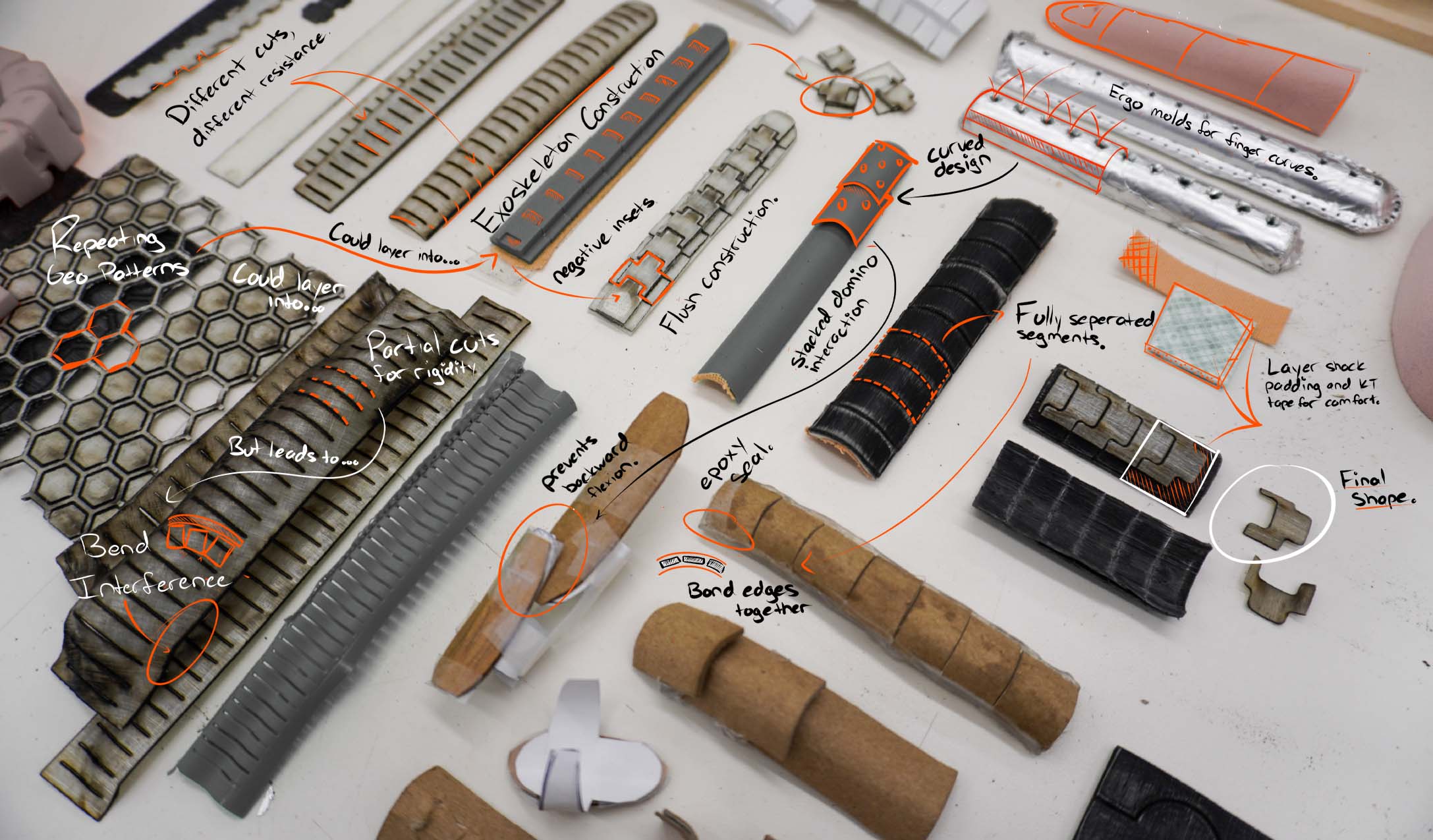
I needed a system that allowed fluid forward flexion while providing firm backward and lateral resistance. The curved geometry of thermoformed sheets solved the lateral problem, but intact sheets created internal interference due to the panel's varying radius when bending.
To fix it, I designed a "fallen-domino" stacked construction. This interlocking geometry creates a mechanical stop that resists hyperextension while eliminating internal collisions. Finally, I fortified the edges with epoxy to ensure the spines' integrity during repetitive high-impact collisions.
↑ Hinge mechanism illustration
Final Design
for a new dimension of protection.
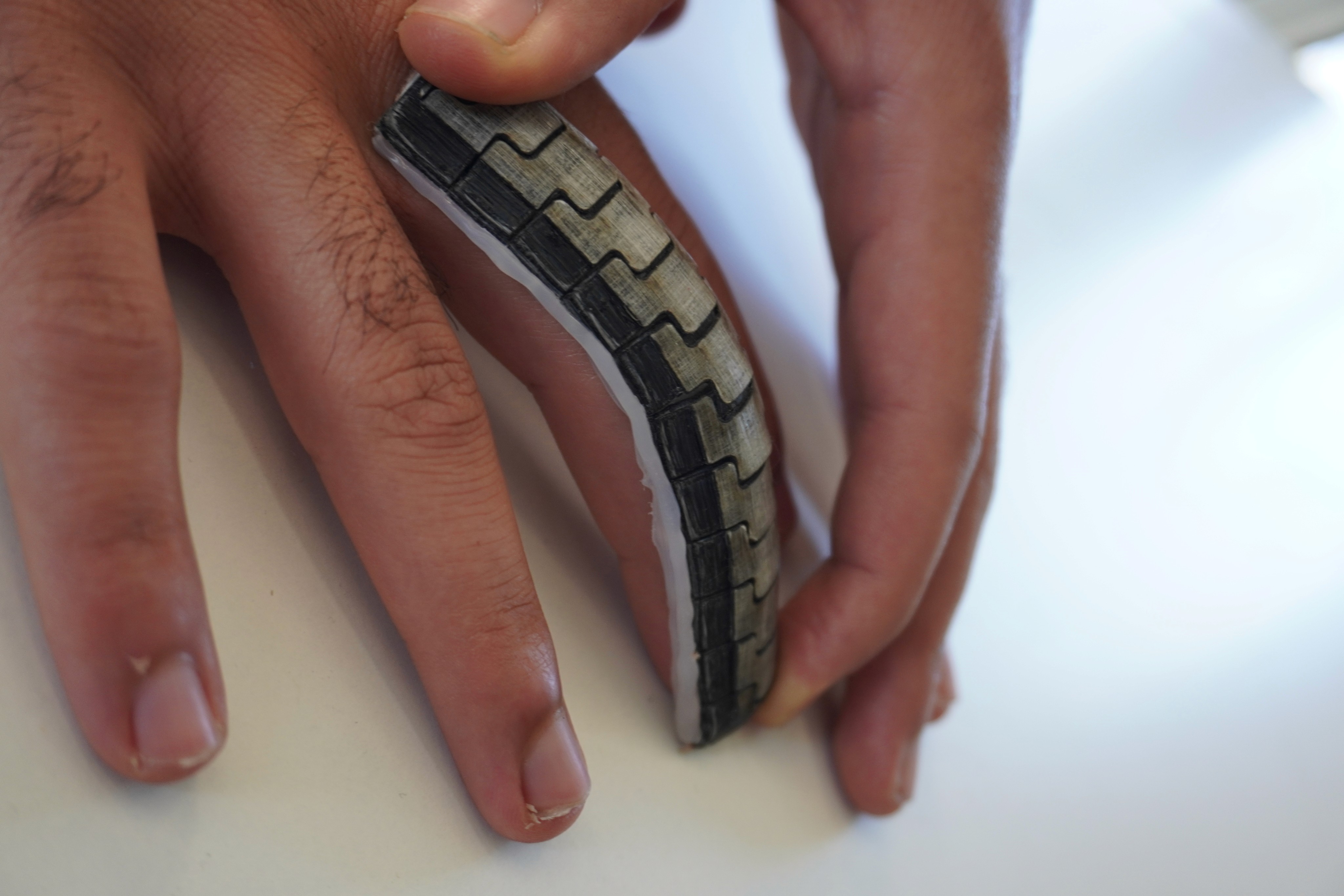
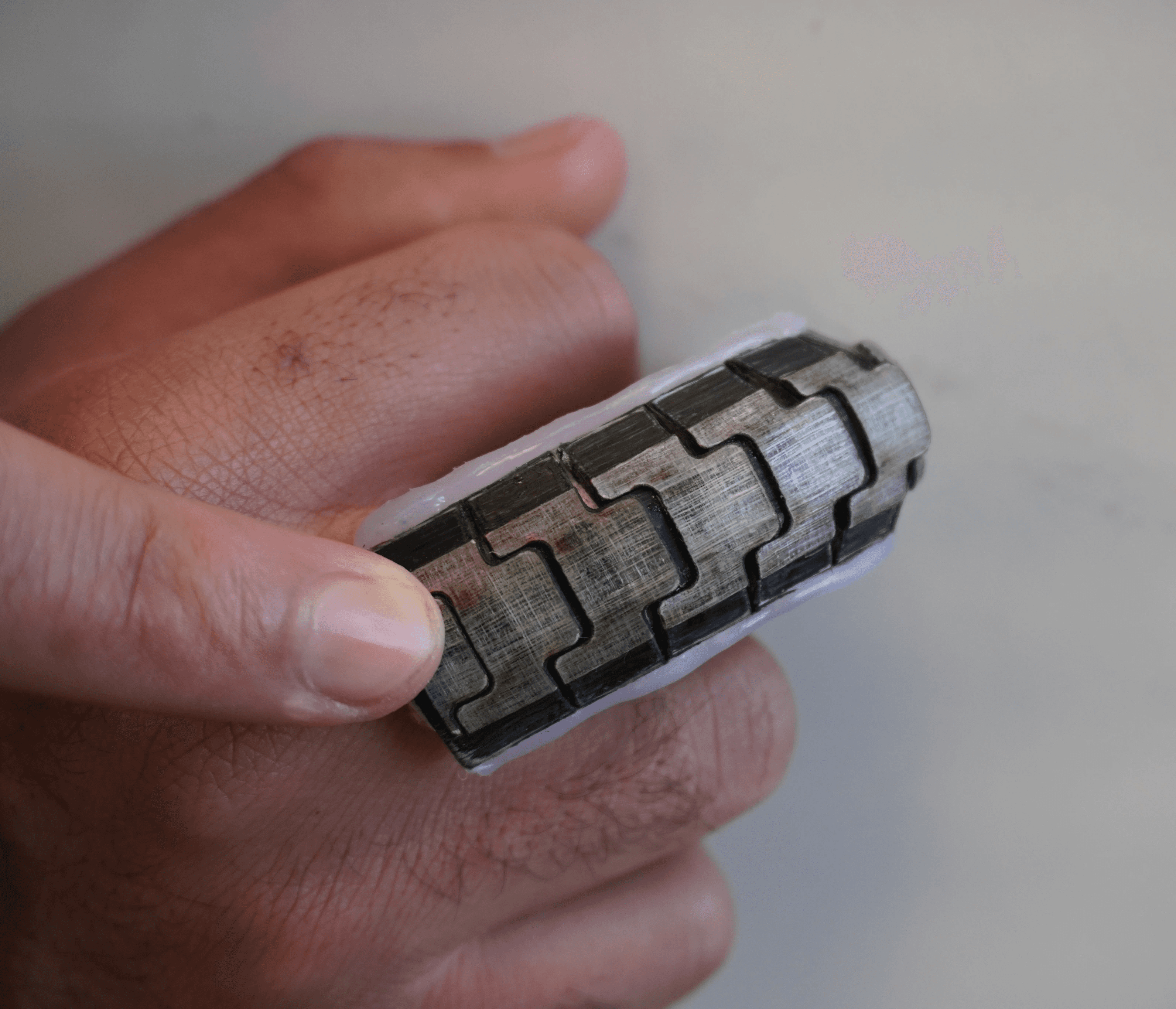
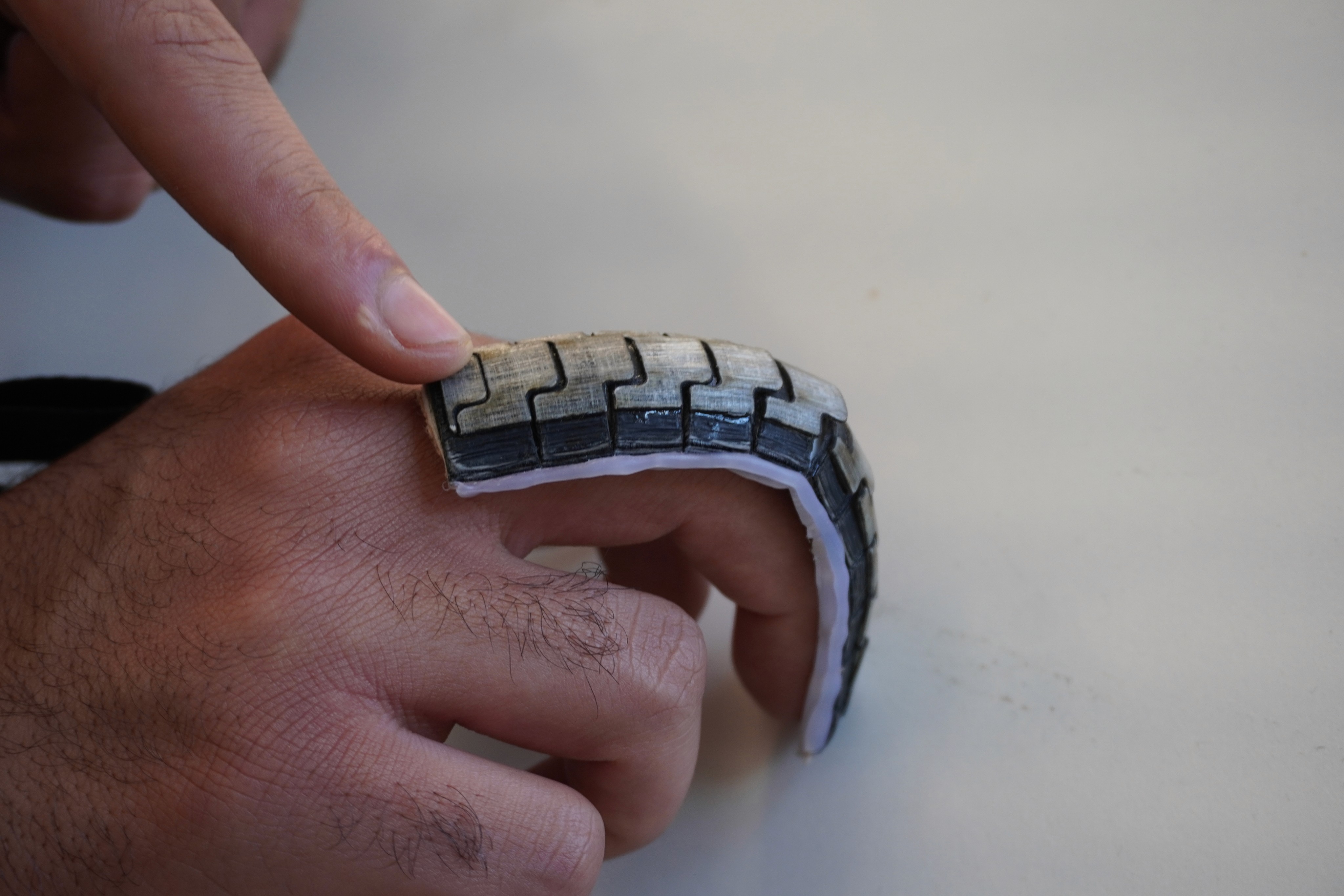
The final assembly is a multi-layered construction realized through a precise thermoforming, laser cutting, and layering process. This architecture provides ergonomic cradling for the fingers, delivering critical lateral protection for saves at awkward angles. By leveraging PolyStrand, the system is also significantly lighter than current solutions on the market, giving goalkeepers a less restricted range of motion and enhanced dexterity when catching or punching.
PRODUCT Anatomy
Considered at every layer.
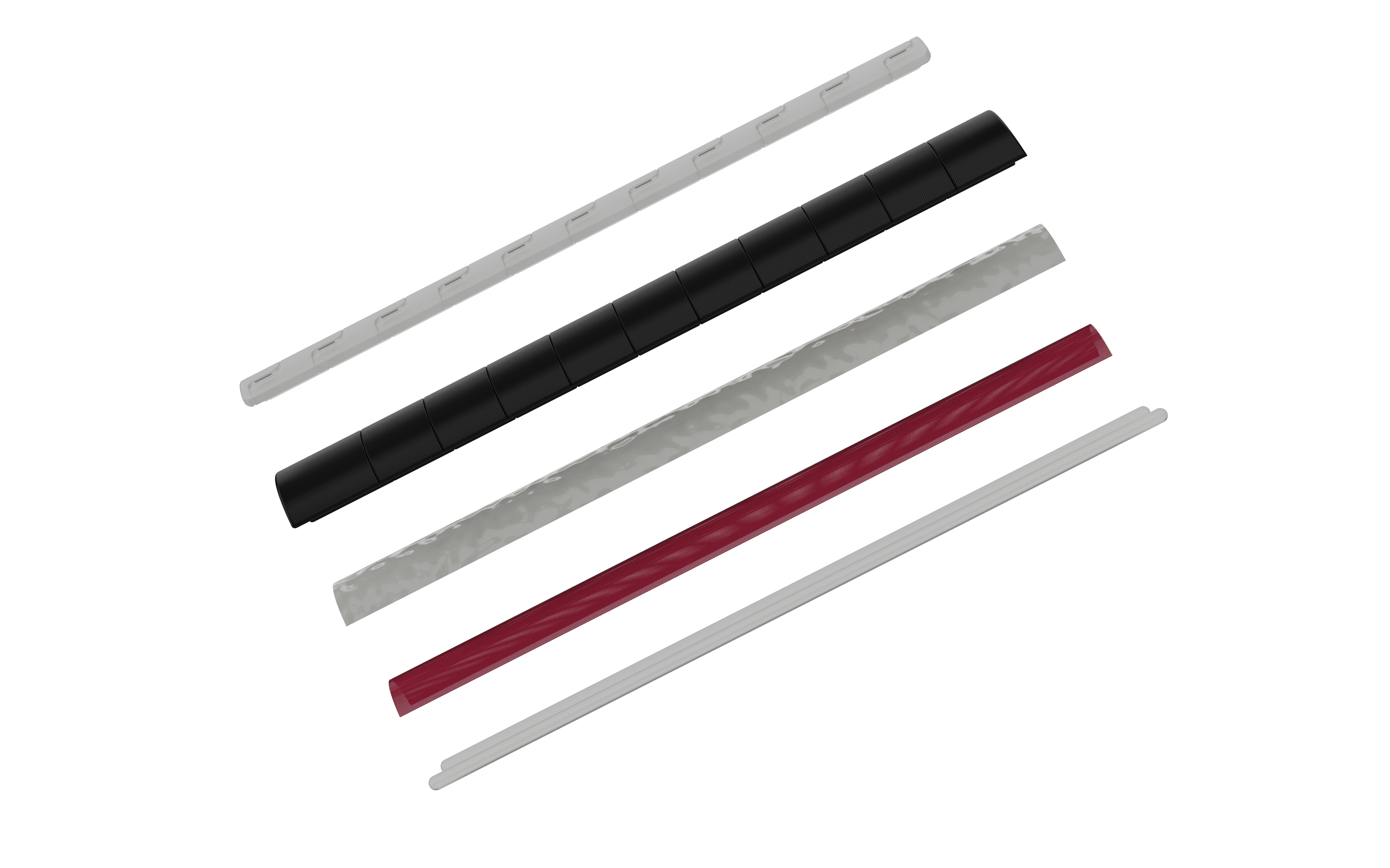
Five layered components form the FlexGuard system. Each is selected for its specific contribution to reinforced impact protection, durability, and ability to preserve the goalkeeper's range of motion.
01
X-Ply PolyStrand
Cross-ply oriented top layer that provides multi-axial resistance against lateral hyperextension during high-impact saves.
02
6-Ply PolyStrand
Six unidirectional layers laminated together — the primary spine of the FlexGuard, tuned for forward flexion and backward resistance.
03
Shock Padding
Internal foam layer that absorbs impact and evenly distributes force away from the finger joints during deflection.
04
KT Tape
Adhesive medical tape that secures the assembly to the glove and reinforces the joint articulation zones.
05
Epoxy Rails
Hardened epoxy reinforcements bonded along the panel edges to maintain structural integrity through repetitive collisions.